
The warmest thing
on earth weighs
almost nothing
Eiderdown is the fine breast down of the eider duck, gathered by hand from nests the bird has already left. It is the warmest and lightest natural insulation known, and the rarest: one nest yields a few grams, and the world produces a few thousand kilograms a year.

A material with no substitute
Eiderdown refers to the soft, fine breast down of the eider duck, renowned for its insulating and lightweight properties. It is not a grade of goose or duck down. It comes from a wild sea bird that cannot be farmed, and it is gathered rather than produced.
Down is not feather. A feather has a stiff quill and a flat vane, built for flight, and it conducts heat along its length. A down cluster has no quill at all: a small nucleus with filaments radiating in every direction, each carrying barbs finer than a human hair.
In eiderdown those barbs are hooked. Clusters catch on one another and hold, so the fill behaves as one continuous, breathing sheet rather than loose powder that migrates into the corners of a baffle. The fill never shifts, and because the sheet flexes rather than compresses it drapes around the sleeper and closes the gaps where body heat is normally lost.
That is why the material is measured differently. Fill power figures for goose down assume clusters that sit loose and rebound independently. Eiderdown sits above the top of that scale, and is judged by weight of fill per article rather than by loft alone. Because the fill holds itself together, an article needs no heavy quilting to keep the down in place, which is why an eiderdown comforter has so few seams and so little structure to it.
Anyone who has slept under it describes the same thing: a comforter so warm and so light that the weight of it disappears. That is a physical property rather than a phrase. A queen-size eiderdown comforter weighs under a kilogram, and most of that weight is the cotton shell rather than the fill inside it.
The clusters also release moisture as readily as they hold heat. A fill that would be stifling in synthetic wadding stays comfortable in a warm bedroom, because it breathes with the sleeper instead of sealing them in. One article therefore tends to work across the whole year rather than only in deep winter, which is part of why these were historically bought once and kept.

Four properties nothing else combines
Eiderdown is world-renowned for its warmth-to-weight ratio. A handful is enough to keep a person warm on the coldest night of the year.
Unmatched insulation
The highest warmth-to-weight ratio of any natural material. Filaments cluster and trap air, creating a thermal barrier that weighs almost nothing.
Lightweight coziness
As known for its softness as its warmth. The down moulds to the body and moves with it, closer to being covered by air than by bedding.
Breathability
The clusters release moisture as readily as they hold heat, which is why one article works across seasons rather than only in deep winter.
Limited supply
Only a few ounces come from each nest, and the number of eider ducks is finite. That scarcity, and the hand labor behind it, is the price.
What eiderdown is made into
Comforters, duvets, pillows and mattress toppers, and outerwear from the same down. Every article is filled by hand in Iceland and carries a numbered government certificate.
Tell us the room, the climate and how you sleep. We will tell you the fill weight to buy, and talk you out of the wrong one.
Speak to us →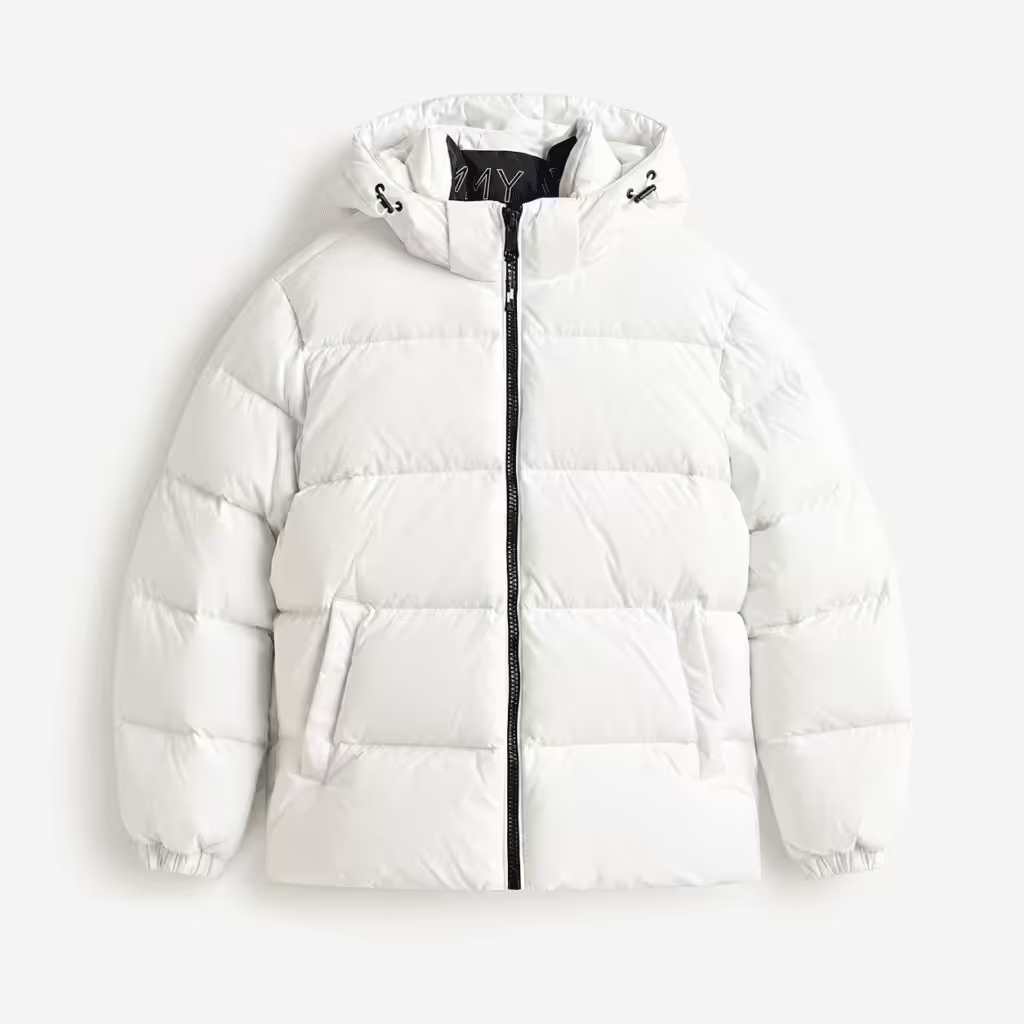 Eiderdown Jacket for Men and Women Price range: $4,999.00 through $9,999.00
 Icelandic Eiderdown Baby Comforter Price range: $1,369.00 through $3,399.00
 Icelandic Eiderdown Comforter Price range: $6,349.00 through $13,599.00Icelandic Eiderdown Duvet Price range: $4,099.00 through $12,399.00
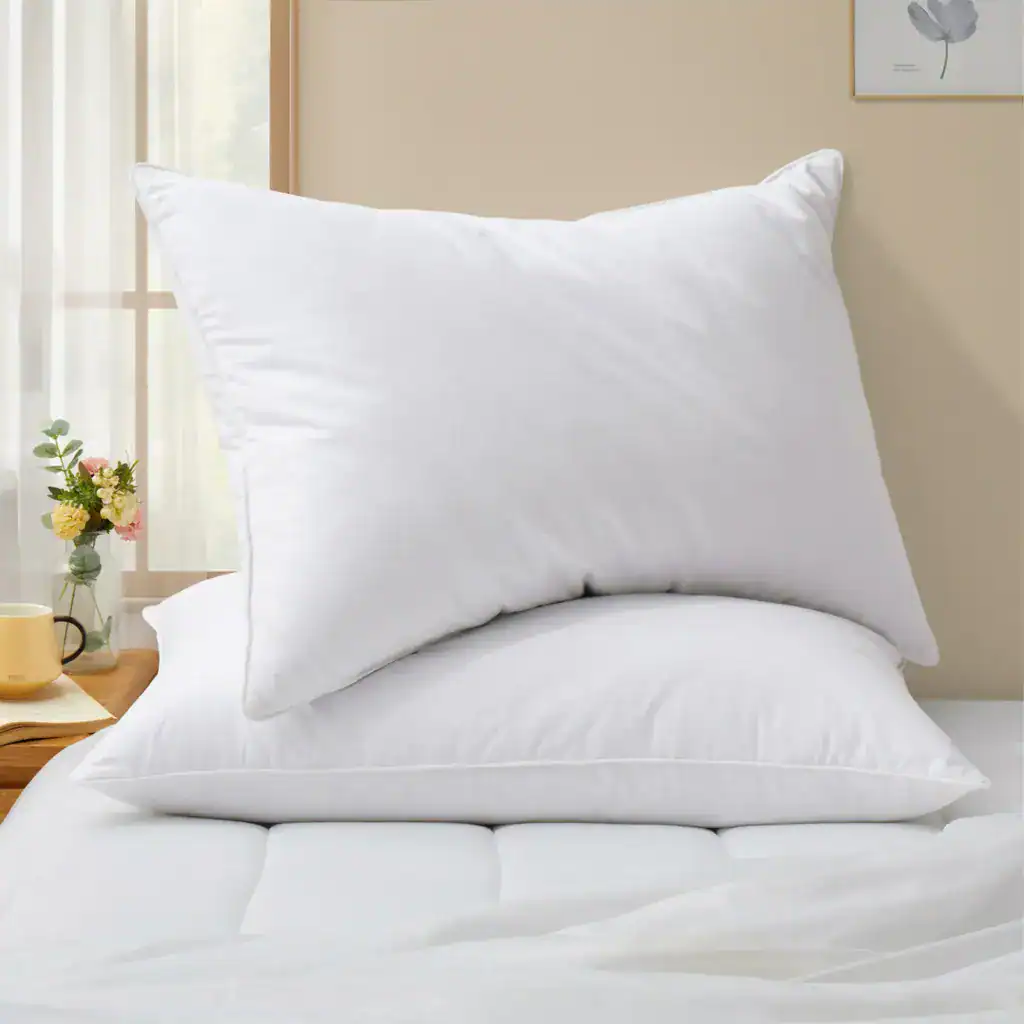 Icelandic Eiderdown Pillow Price range: $2,459.00 through $6,159.00
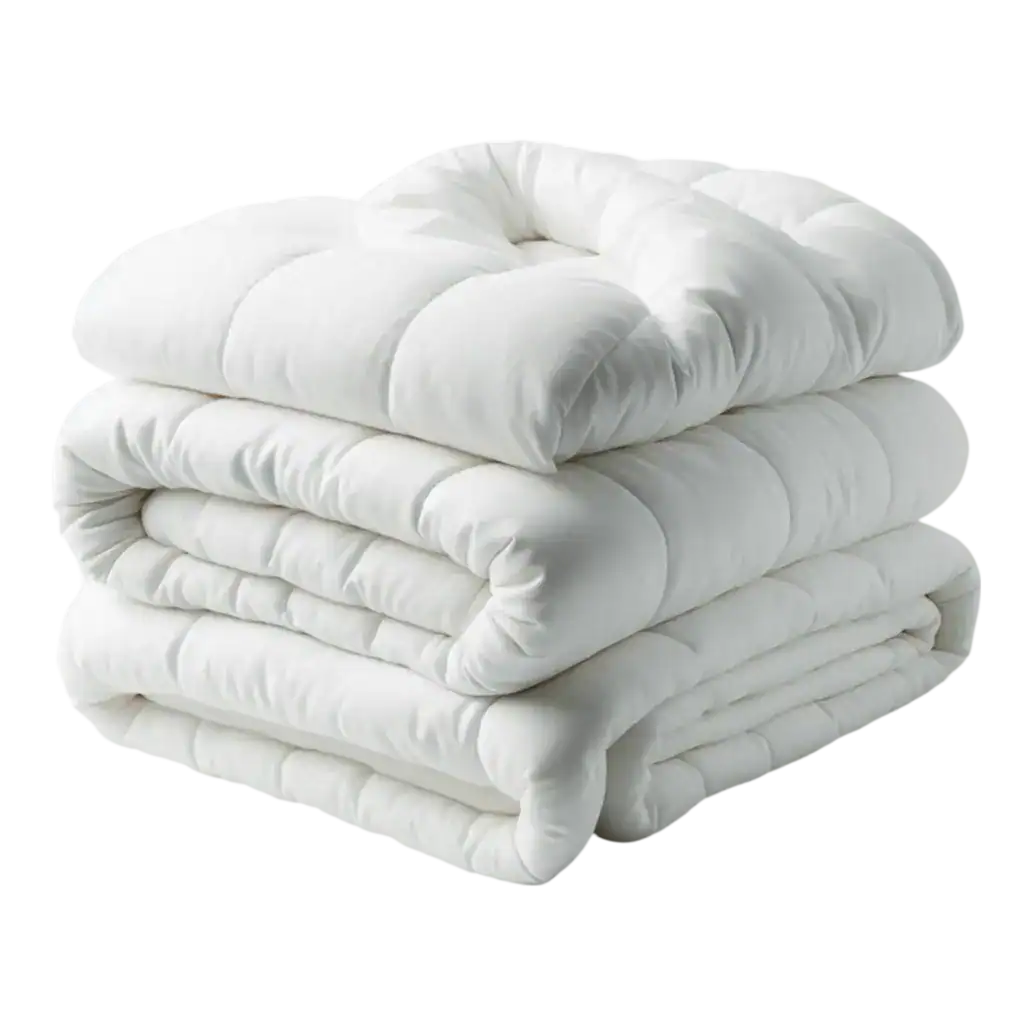 Mattress Eiderdown Topper Price range: $6,299.00 through $19,799.00
Nothing is ever plucked
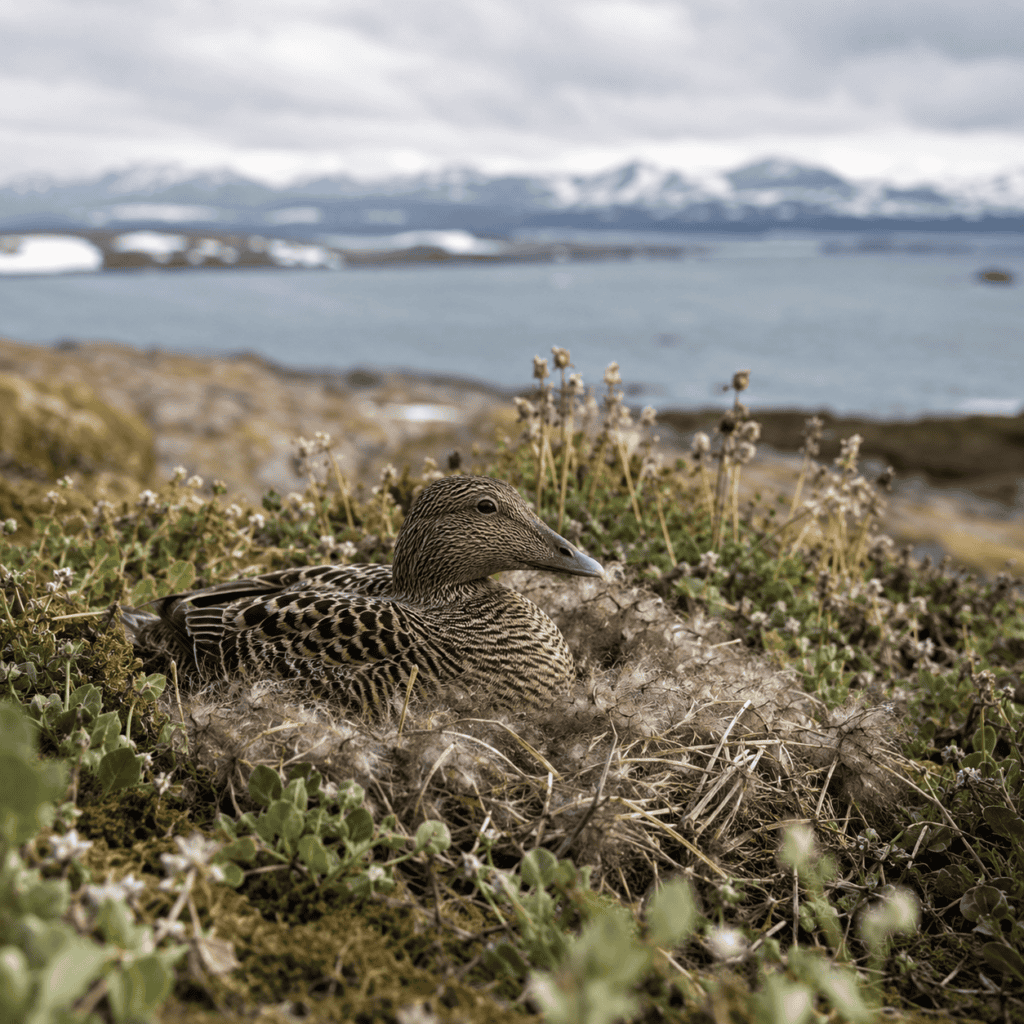
The eider is a sea duck of the Arctic coasts, built to hold body heat through freezing water and constant wind. Its outer plumage is weatherproof; what sets it apart is the ultra-fine undercoating beneath, evolved for supreme warmth in the harshest conditions any bird endures.
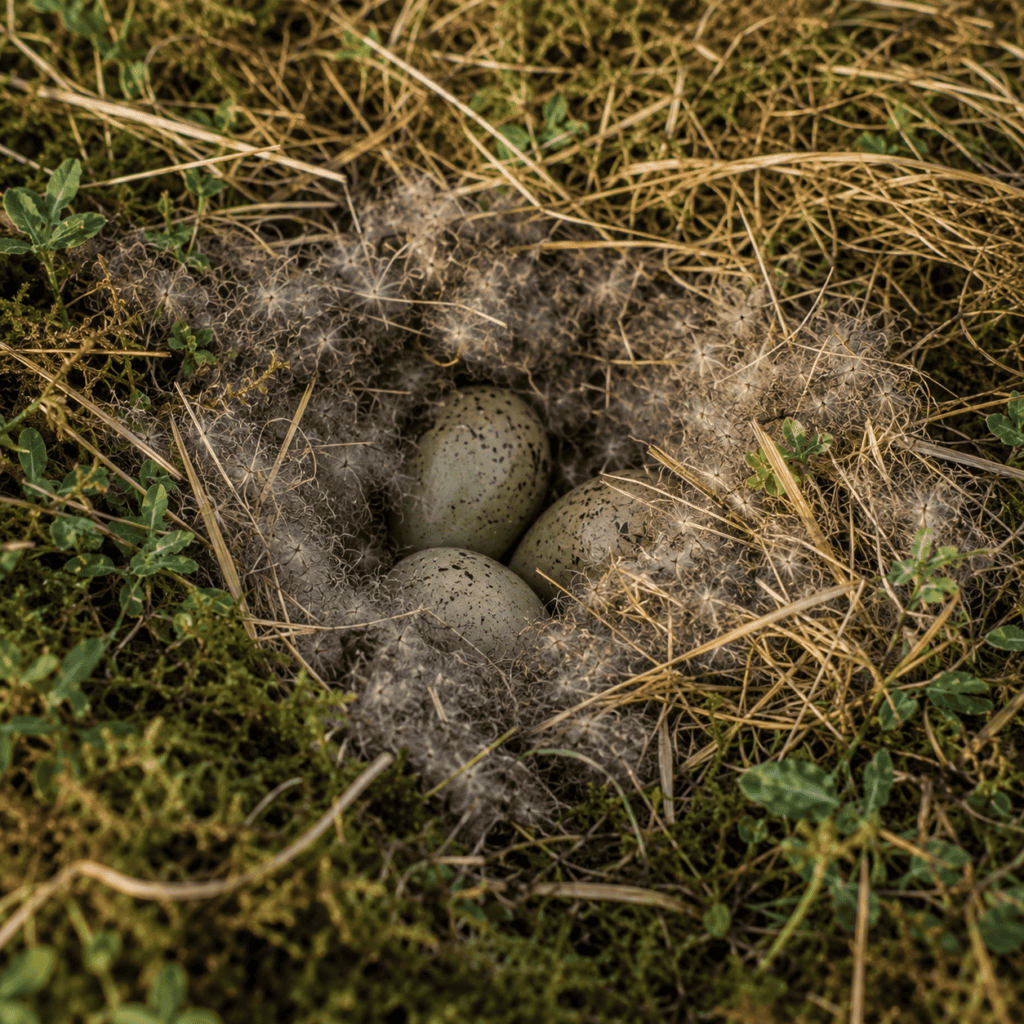
The female pulls that down from her own breast to line the nest, where it insulates the eggs through a North Atlantic spring. When the ducklings leave for the water, the down stays behind. For centuries it has been gathered from those nests, taking only the lining once the duck has abandoned it.
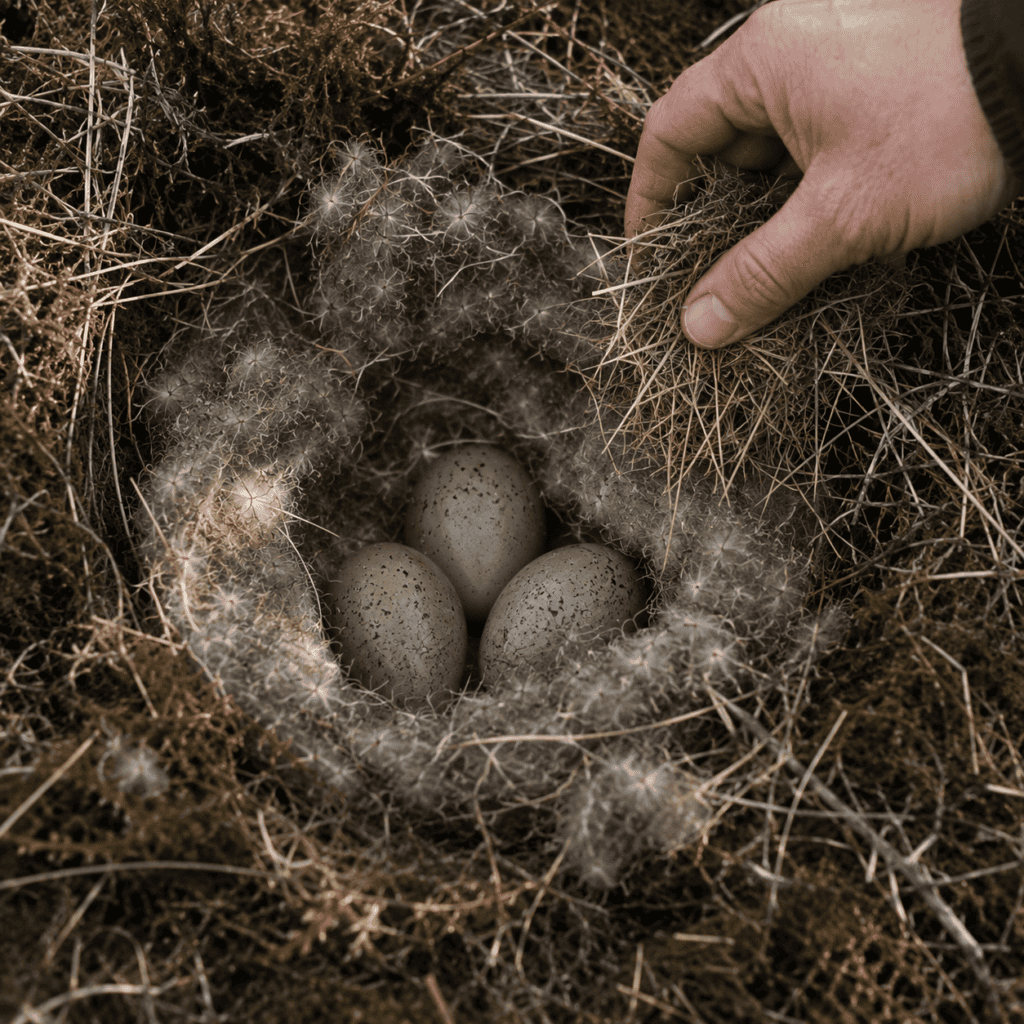
A colony is worked twice. During the season a small amount is lifted from each nest and replaced with dried hay, so the eggs stay just as warm. After the birds have gone, the rest is collected. Nothing is plucked from a live bird, and nothing is taken while the ducklings still need it.
In Iceland the eider has been protected by law for more than a century. The colonies are semi-wild: they return to the same shorelines every spring because the ground is safer than anywhere else on the coast, and because the families who hold it have spent generations making it so.
Four stages, almost all of them by hand
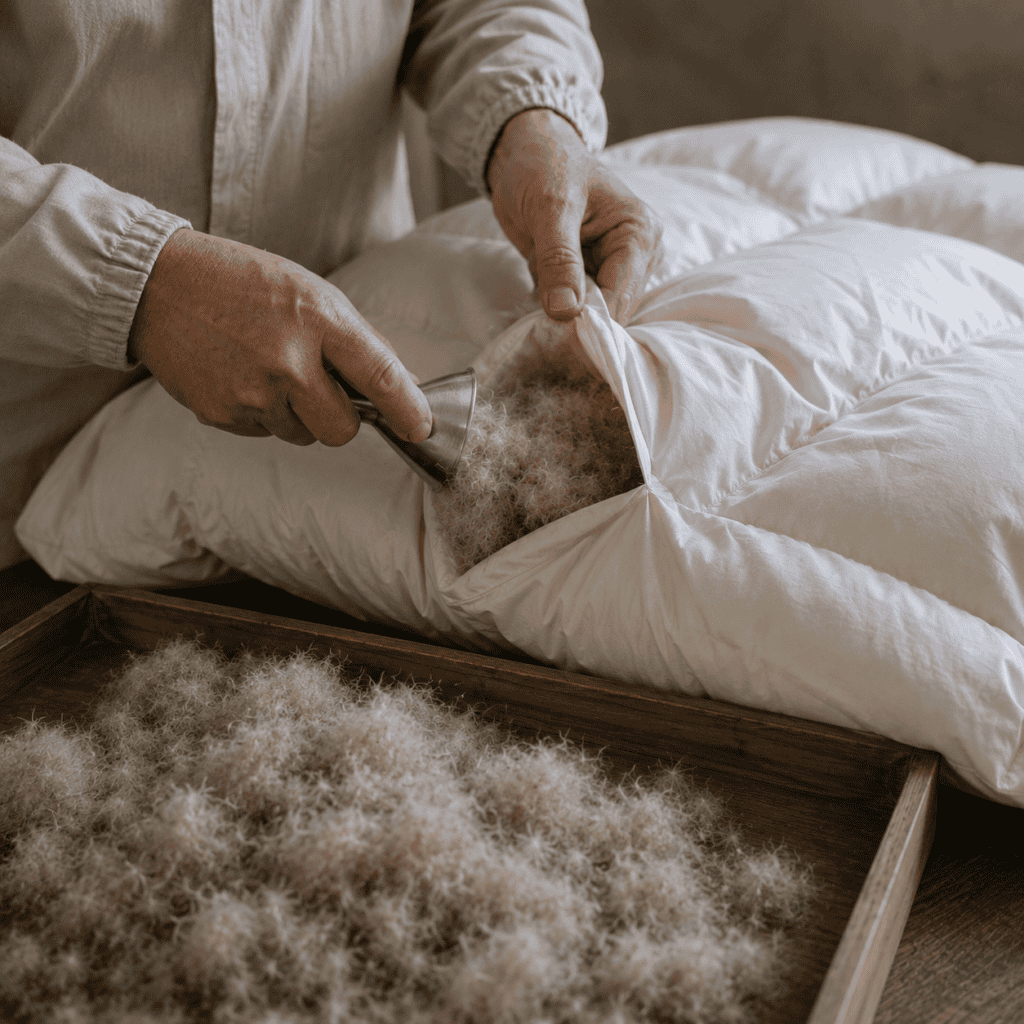
Raw down leaves the nest heavy with hay, shell, grass and salt. Turning it into something you can sleep under is slow work, and the reason the material has never industrialised.
Gathering
Collected by hand, nest by nest, across a season of about six weeks. A good nest gives fifteen grams.
Drying and heating
The down is dried, then turned over a heated grid that loosens hay and shell without harming the clusters.
Hand-picking
What remains is picked clean on a rack under a lamp. The work is measured in hours per kilogram, not minutes.
Filling by hand
Down is weighed into each channel of the shell by hand, because a machine cannot tell when a chamber has taken too much.
Icelandic law does not permit eiderdown to be sold until a licensed assessor has examined and sealed it. Every finished article carries a numbered certificate that traces back to a shoreline and a season. No other down in the world is regulated this way.
See a certificateWhy it costs what it costs
Only a few ounces are harvested per nest, there are a limited number of eider ducks in the world, and the supply is therefore precious and finite. Total annual production for the whole of Iceland is measured in the low thousands of kilograms. It has not grown in fifty years, and there is no method by which it could.
Combined with a labor-intensive gathering and cleaning process, that scarcity makes eiderdown one of the most expensive natural fibers on the planet. The price is not a positioning decision. It is the arithmetic of sixty nests, a season and a pair of hands.
Eiderdown's value goes beyond its monetary worth. It represents a time-honoured tradition of sustainable harvesting and respect for nature.
Against that price sits a working life measured in decades. A well-kept article outlasts several mattresses and is routinely passed between generations, which is a different proposition from bedding replaced every few years. Because the clusters interlock rather than break down under compression, the loft holds long after goose down has flattened.
Supporting the ethical production of eiderdown also preserves the livelihoods of the coastal communities that have carried the practice for generations, and with them the protection those communities give the colonies. The tradition and the bird depend on one another; neither survives the loss of the other.

The colony comes back because it works for the bird
As demand grows, sustainability matters more rather than less. Nothing about the arrangement between farmer and eider is enforced on the birds: they return each spring because the ground is safer than anywhere else on the coast. That single fact does more for the species than any regulation could.
Sustainable harvesting
Responsible gatherers follow strict guidelines: only a portion of the down is lifted from each nest during the season, and enough is always left for the ducklings. This is what keeps both the eider population and the practice itself intact. A colony pressed too hard simply leaves, and a farm that loses its eiders does not get them back.
Animal welfare
The ducks are never harmed or disturbed while the down is gathered, and their habitats are meticulously protected: shorelines kept clear of foxes, mink and gulls, windbreaks raised before the season, and the colony left alone at the hours the birds feed. Buying ethically also preserves the livelihoods that make that protection possible.

The eiderdown experience
Eiderdown is about more than warmth and comfort. It is the feeling of being covered by the lightest thing in the room, and a connection to a coastline, a bird and a practice kept for centuries.
Frequently asked
Anything else, write to us. We answer within a day.
The warmth comes from the structure of the down: thousands of tiny filaments that trap air and form an efficient thermal barrier. The lightness comes from how fine those fibers are. A handful is enough to keep you warm on the coldest night.
It is gathered by hand from eider nests during and after the breeding season. Only the down lining the nest is taken, and enough is always left for the ducklings. The practice has been carried out this way for centuries.
Yes. Ethical eiderdown production prioritises animal welfare. The ducks are never harmed or plucked, they are not disturbed while the down is gathered, and their habitats are protected through the season.
Rarity and labor. Each nest yields only a few grams, the number of eider ducks is finite, and gathering, cleaning and grading are done largely by hand. It is also the warmest and softest natural fiber available.
Yes. Its insulation and low weight make it ideal for high-end outerwear such as parkas and jackets, as well as accessories like scarves and gloves.
Air it rather than wash it. A morning outdoors between seasons restores loft, and a duvet cover keeps the shell clean. When a full clean is needed it should be done by a specialist, never in a domestic machine.
Decades. Because the clusters interlock rather than break down under compression, loft holds far longer than in goose down. A well-kept article commonly outlives several mattresses and is passed on.
Read further
All entries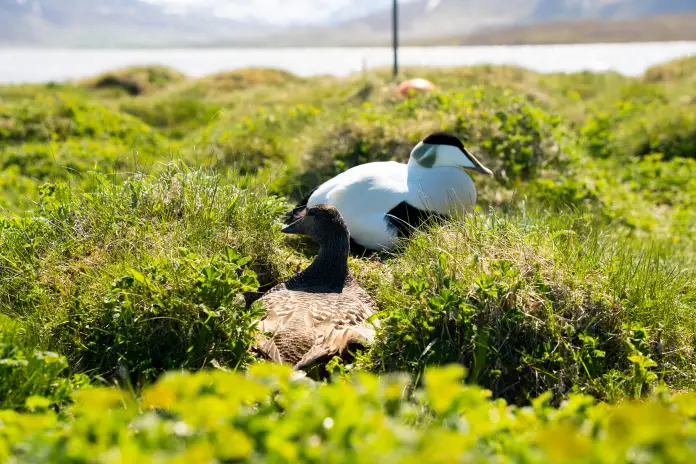 EiderdownEiderdown VS Goose Down: Which is Better for Your Sleep?When investing in high-quality bedding, the choice between Eiderdown VS Goose Down is critical for achieving optimal sleep comfort.
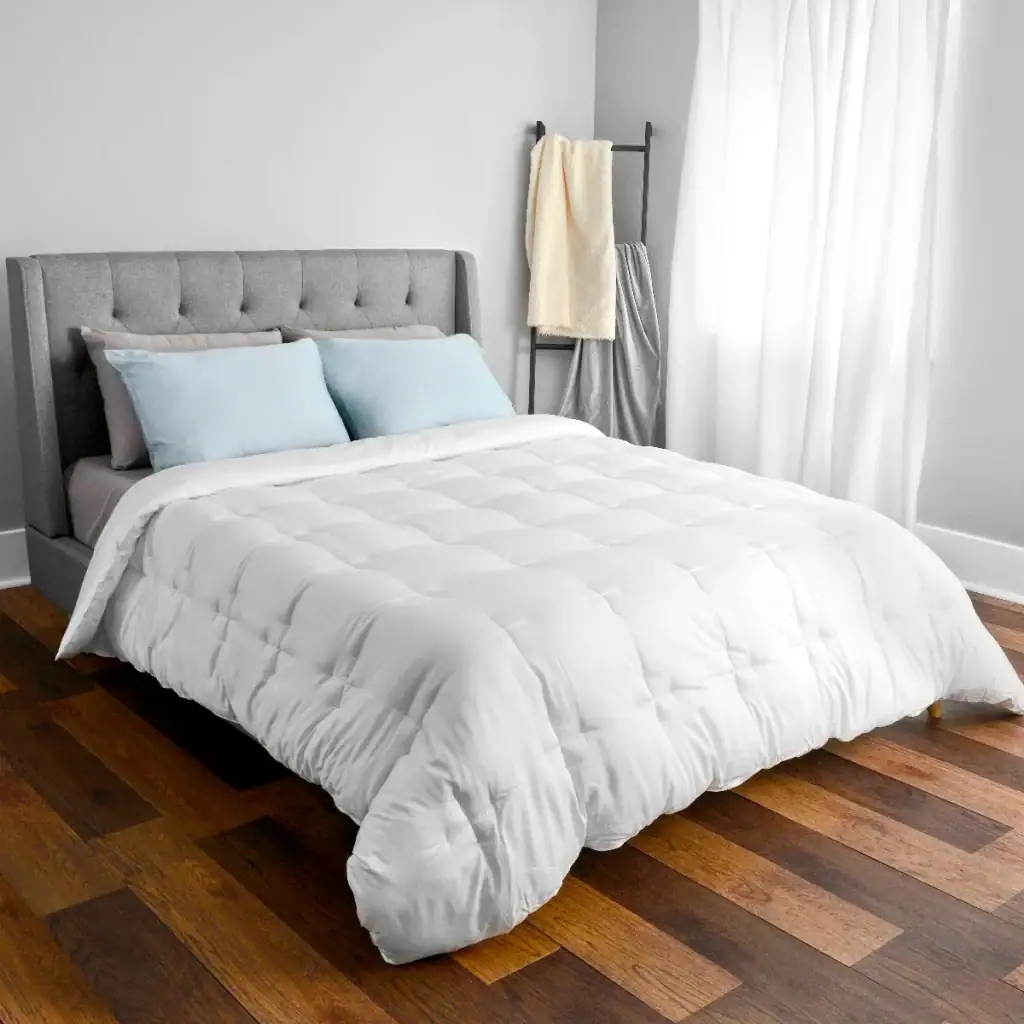 BeddingEiderdown Fill Power Explained: What It Means for Warmth & ComfortFill power is one of the most misunderstood terms in bedding, especially when it comes to luxury products like eiderdown comforters.
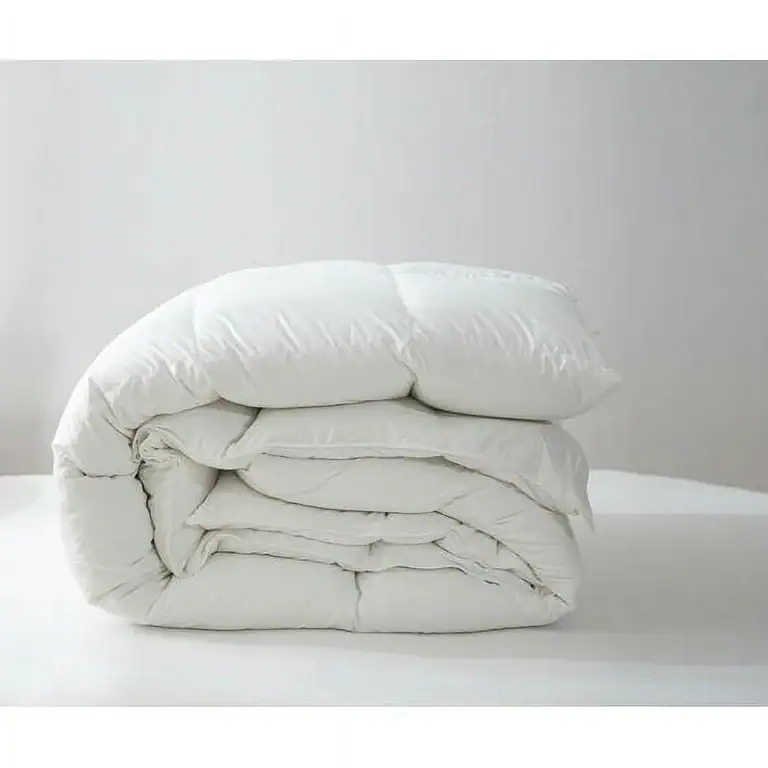 BeddingHow Eiderdown Bedding Helps Improve Sleep QualityFor years, I struggled with restless nights. I would toss and turn, trying to find comfort under blankets that were either too warm, too heavy, or left me chilled in the early morning hours.