
A short season, a wild bird,
and four generations of patience
We have gathered eiderdown from the same stretch of Icelandic coastline since 1960. Nothing about the way we do it has become faster.
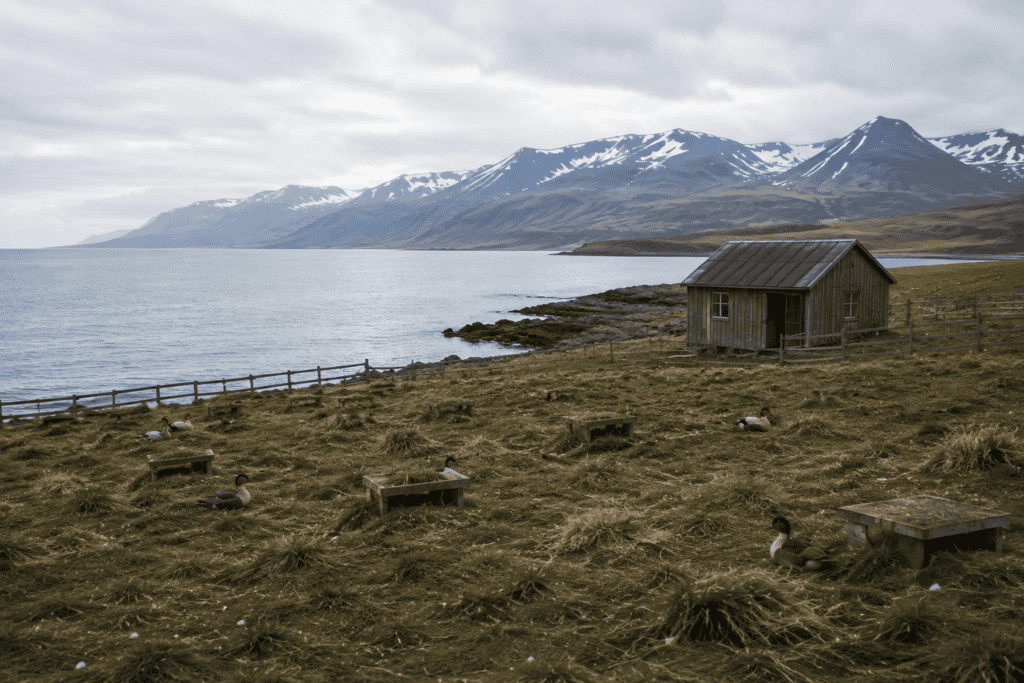
Eiderdown cannot be farmed. The common eider is a wild sea duck, protected in Iceland since 1847, and she chooses where she nests. Every year she returns to the same low islands and shorelines, builds a bowl of down, raises her ducklings, and leaves. What she leaves behind is the warmest natural insulation on earth.
Our family has tended the same colony for four generations. We repair nesting shelters through the winter, keep the foxes and gulls away through the spring, and wait. The gathering season lasts a few weeks in June. A good year yields enough down for a few dozen comforters.
That is the whole business. It cannot be scaled, hurried, or automated, and we have never wanted it to be.
One comforter takes twelve months, not twelve hours
The calendar belongs to the birds. Everything we make follows it.
Repair
Nesting shelters are rebuilt, driftwood cleared, and the shoreline walked before the birds return. Quiet months, but the colony depends on them.
Nesting
Around four hundred pairs settle in. We keep watch day and night against foxes, gulls and ravens, and touch nothing else.
Gathering
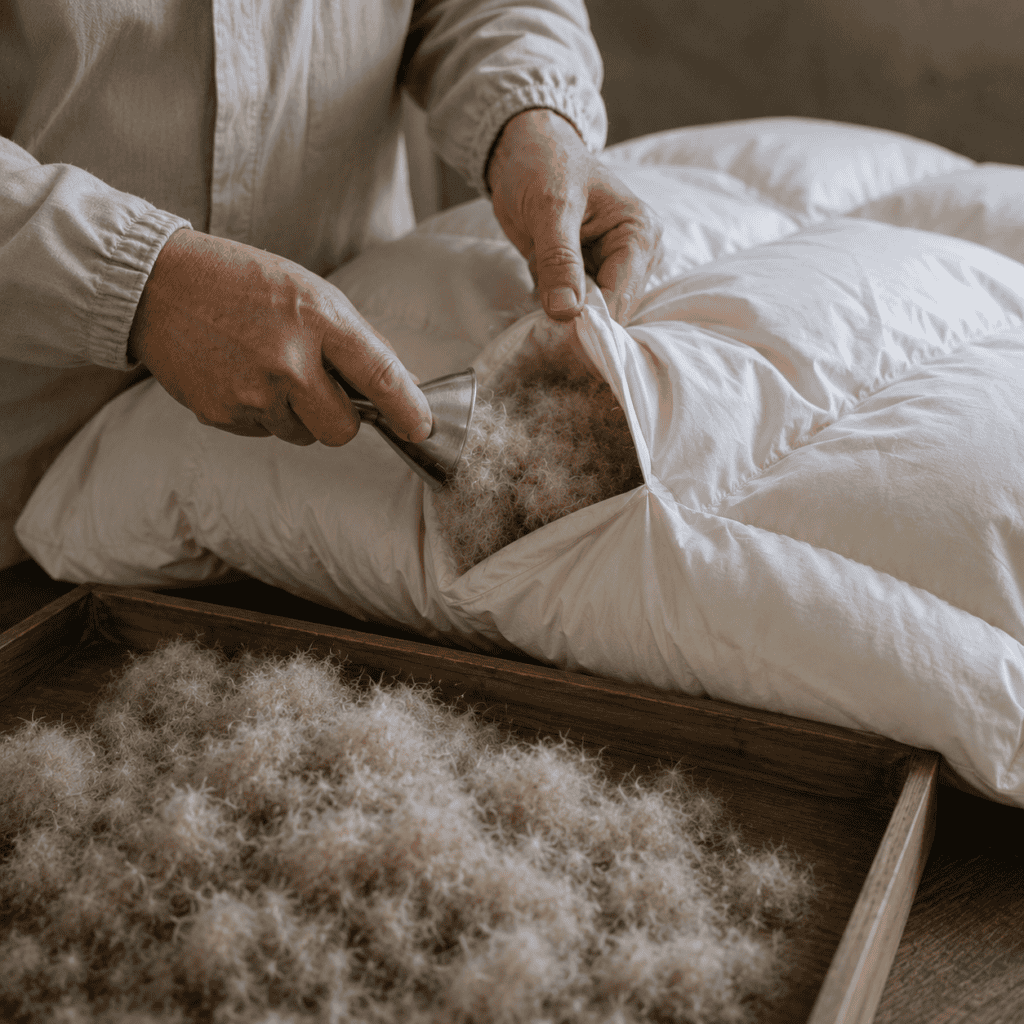
Once the ducklings have left, the down is lifted from each empty nest by hand. A few weeks, and the year’s entire supply is in.
Cleaning & filling
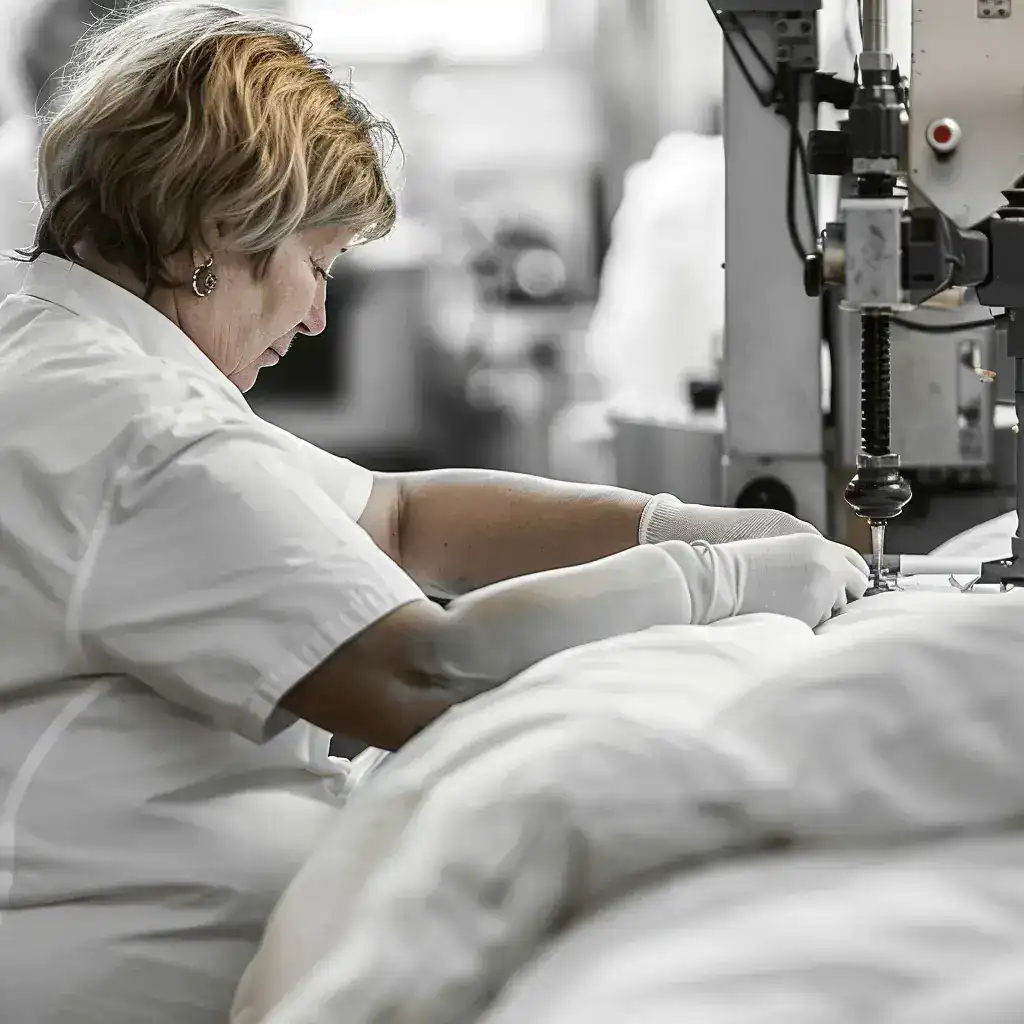
Washed in spring water, dried, hand-sorted quill by quill, then filled to weight and stitched into baffle boxes.
Six minutes on the coast, from nest to needle

The people who do the waiting
The story began in 1960, when the first season was gathered by hand. Anna Jónsdóttir later became the second generation to carry the work forward, keeping the knowledge of the land, the birds and the seasons within the family.
Today, Einar Guðmundsson leads the business as the fourth generation, continuing the same careful approach while overseeing the work and the people behind the collection.
Alongside them, Sigríður Magnúsdóttir leads the workshop, bringing years of experience to the sorting, preparation and finishing of each piece. Evelyn Keaton looks after our clients, from individual questions to the details that follow every order.
The work has changed in some ways. The principle has not.
Six hands, five stages, one comforter
Lifted
Down is taken only from abandoned nests, one at a time, never from a bird.
Washed
Cleaned in Icelandic spring water with no chemicals, then dried in open air.
Sorted
Grass and quills removed by hand. A kilo takes roughly a full day to clean.
Weighed
Filled to the gram for your chosen size and warmth, then lab-tested for purity.
Stitched
24 to 60 baffle boxes are closed by one artisan so the down can never shift.
The birds come first
Eiderdown begins with a relationship between people and the birds that return to the same coastal grounds each season. We protect that relationship by giving the nesting grounds the time, space and care they need.
Gathering takes place only when the season allows. Nests are left undisturbed while the birds are nesting, and the down is collected carefully after the birds have finished using them.
For us, the value of eiderdown is inseparable from the responsibility of protecting the environment it comes from.
What we say comes with proof
Each product is supported by relevant certifications and documentation, giving you a clearer view of what you are buying and where it comes from.



Made once, kept for twenty years
Every piece is filled to your size and warmth after you order it, by one artisan, over three to four weeks, then five to seven business days in transit. It arrives with a certificate, a storage bag, and a ten-year warranty.