The harvest is six weeks long and the birds are never touched
Eiderdown is the only down in the world gathered without a bird being handled. It is collected by hand from nests the eider has already abandoned, on islands the same families have protected for generations.

Nine steps, from an empty nest to a sealed article
The season is short. Most of the work happens in six weeks, and the rest of the year is spent cleaning what those weeks produced.
The islands are made ready
Before the birds arrive, farmers walk the nesting grounds, clear old material, set out shelters and check the fences. Fox and mink are tracked and moved on. Nothing about the season works if the site is not safe first.
The eiders return
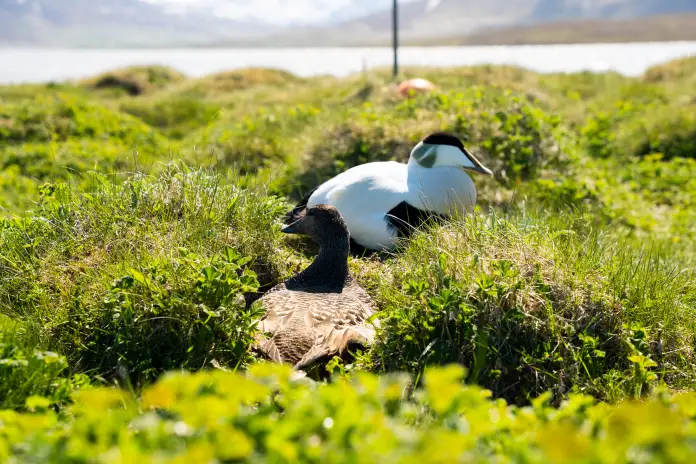
The colony comes back to the same islands, often to the same few square meters. A large site may hold two or three thousand nests. The birds are wild and free to leave; they return because the ground has been kept for them.
The nest is lined
The female plucks down from her own breast and packs it around the eggs. It is the finest insulating material in nature: clusters with hooked filaments that cling to one another rather than sitting flat.
Twenty-six days of sitting
She incubates almost without leaving. Farmers keep their distance and their dogs at home, walking the site only to turn away gulls and ravens. Disturbance at this stage costs the whole nest.
The ducklings go to sea
Within a day of hatching the brood walks to the water and does not come back. The nest is finished. Only now does anyone touch it.
The down is collected
Each abandoned nest is lifted by hand into a sack. A good nest gives around 60 grams of raw down, mixed through with grass, seaweed and shell. Nests still holding eggs are left exactly as they are.
Drying and coarse cleaning
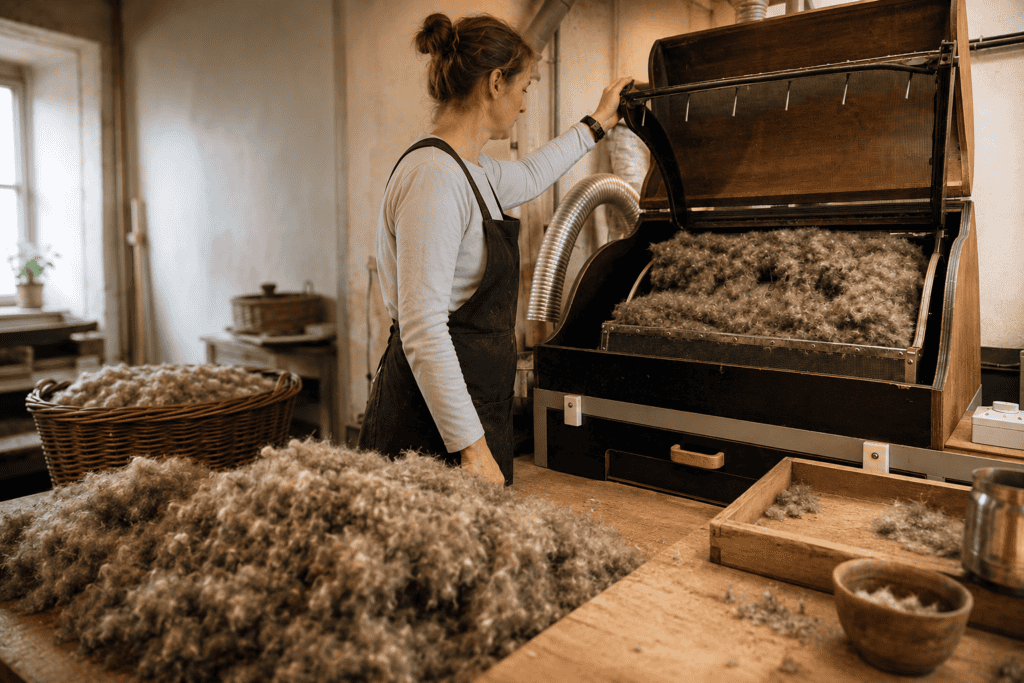
The raw down is dried, then tumbled over a heated grid so the heavy debris falls away. This is the first of several passes, and the only one a machine does most of the work in.
Washing and hand sorting
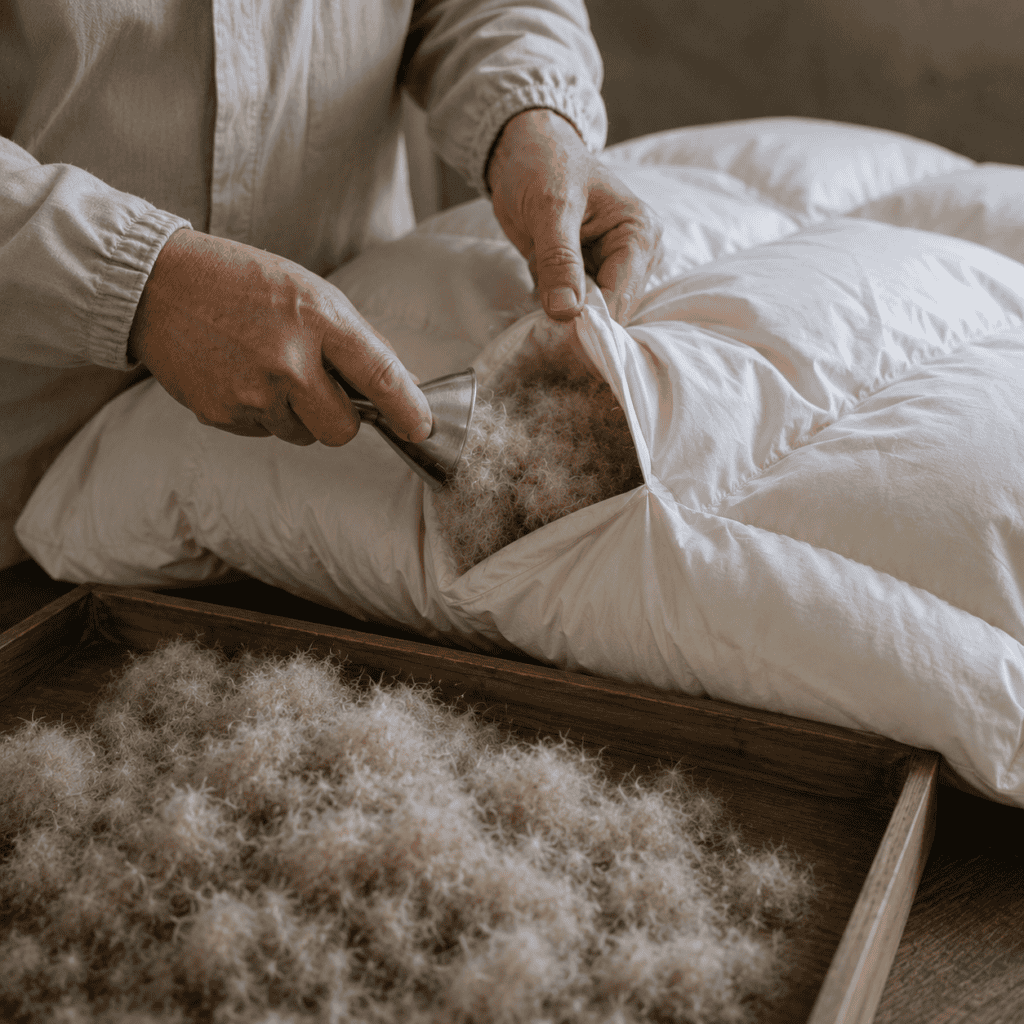
Washing in soft water without detergent, slow drying, and then the long part: pulling the last stalks and quills out by hand at a lit table. A kilogram of raw down finishes at 600 to 700 grams.
Weighed, inspected, sealed
A licensed assessor appointed by the Icelandic government inspects the cleaned down and every finished article, then seals it. Without that seal the article cannot legally be sold as Icelandic eiderdown.
Nothing is taken from a bird
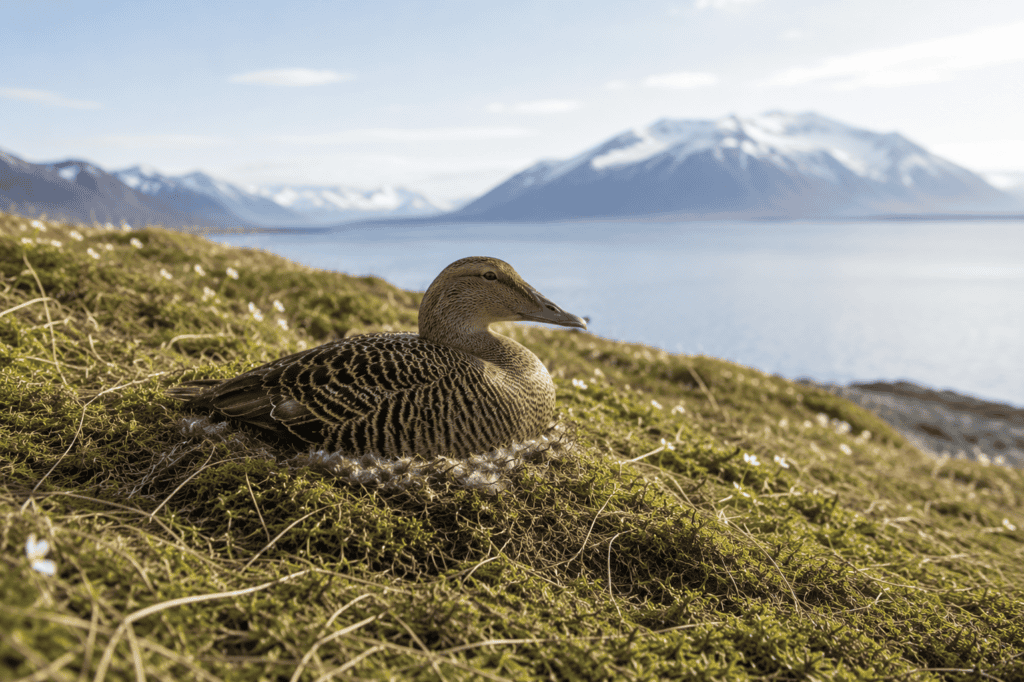
The female eider plucks down from her own breast to line the nest and insulate the eggs. She leaves it behind when the ducklings go to sea. Everything we sell is collected after that departure, from a nest that will not be used again this year.
The colonies are not farmed in any conventional sense. Families protect the same islands across generations, keeping fox, mink and gull away through the nesting weeks. The birds return because the site is safe, and the harvest exists only because they do.
Forty hours of water, heat and hand work
Raw down arrives full of seaweed, grass, shell and feather. It is dried, tumbled over a heated grid to shake the coarse matter loose, washed in soft water without detergent, then dried again in slow heat.
The last stage is still done by hand at a lit table, where the remaining stalks and feather quills are picked out one at a time. A kilogram of raw down takes roughly forty hours of work and comes out at about 600 to 700 grams.
Sixty nests, one bed
A single nest yields around 15 grams of down once cleaned. A Full / Queen comforter holds about 900 grams. The arithmetic is the reason these are expensive, and the reason they last long enough to be handed on.

“We do not think of it as collecting down. We think of it as keeping the islands safe for six weeks. The down is what the birds leave behind when we have done that well.”
No article leaves Iceland unsealed
A licensed government assessor weighs, inspects and seals every finished article. Iceland is the only country where that inspection is a condition of sale rather than a courtesy.